| If
you think a salad is just rabbit food
. . . think again! Get out of the rut
of some torn iceberg lettuce and sliced
tomato. Today most markets carry a wide
variety of salad greens. Try to use several
varieties in your salads. Many larger
markets also carry a loose premixed mesclun,
which contains a variety of greens (usually
arugula, beet top, frisee, baby spinach,
radicchio, mache, mizuna and red oak leaf
lettuce to name a few). You can also blend
your own by going through the produce
department and picking your favorites.
Interesting flavors that add a little
zing or extra flavor to your regular lettuce
are the slightly bitter chicories such
as endive or radicchio, peppery arugula
or even mild baby spinach. Look for interesting
textures and colors in your greens as
well. Try adding some frisee or curly
red leaf lettuce for added texture. For
a slightly sweet, mild anise flavor, try
adding some chopped fresh fennel bulb
to your salad.
Wash
greens well and pat dry with paper towels
or use a salad spinner to get rid of excess
water. If greens are dry, the dressing
will then adhere better to the leaves
and not be diluted. Estimate about 2 cups
per serving for each individual.
Besides
the green themselves, you can also add
other veggies. Tomatoes, onions or green
onion, bell peppers, cucumbers, shredded
or thinly sliced carrots, shredded cabbage,
avocado, olives (both green and black),
celery, cauliflower, broccoli, radishes,
peas, corn, beans, canned water chestnuts,
jicama, canned hearts of palm, canned
artichokes, etc.
Blanched
vegetables that have been steamed and
dunked in cold water baths also make great
salad additions. Asparagus and green beans,
snap peas or snow peas are great when
blanched. Just make sure to leave them
crispy tender with plenty of crunch.
Fruit
can also add color and a nice contrasting
flavor to green salads. Good fruits in
green salads include fresh strawberries,
blueberries or raspberries. Citrus fruit
like orange or grapefruit slices or fresh
pineapple go extremely well with spinach.
Or if you like tropical fruits, try mango
or papaya.
Grilled
roasted vegetables are also great on salads.
Try this with onions, asparagus, yellow
squash, zucchini, mushrooms and many others.
(Really all mushrooms should be treated
in this fashion. Raw mushrooms, even button
mushrooms are slightly toxic when eaten
raw.)
To
make your salad a main course meal, add
grilled chicken, turkey, pork, beef or
even tofu.
Some
ingredients that add real big flavor and
are only needed in very small amounts
are very pungent cheeses such as blue
cheese, gorgonzola, Roquefort or feta
as well as brine cured olives like kalamatas,
toasted nuts, sugared nuts, seeds and
anchovies. Although higher in fat and
calories, a very small amount go es a
long way. Small amounts of fresh herbs
can also add a whole new flavor dimension
to salads and salad dressings as well.
Try basil, thyme leaves, chives, mint
or tarragon. Just make sure the herbs
you use in your salad are not fighting
with the flavor of your dressing.
Do
not over dress your salad. When you toss
your salad with dressing, you only need
about 1 teaspoon of dressing per person.
Most people never taste the salad because
they use so much dressing that is all
they can taste. Also make sure that the
dressing you choose is compatible with
the ingredients in your salad. Just taste
test a small amount together if you are
not sure.
If
you are unsure about what a particular
salad green looks like, see the visual
chart below.
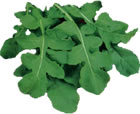 Arugula
 |

Baby Spinach |
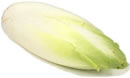
Belgian Endive |
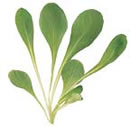 Mâche
Mâche
|
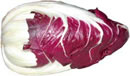
Radicchio |

Lollo Rossa |

Beet Top |

Watercress |
 Tat
Soi
Tat
Soi |

Frisée |

Red Oak Leaf Lettuce |

Mizuna |

Curly Kale |

Tango |

Green Oak Leaf Lettuce |

Red Mustard |

Green Chard |

Mesclun
Mix |
|